Real-time settlement between counterparties
Settle digital assets and fiat in seconds-ensure both sides of the transaction execute simultaneously and within regulated qualified custody.
Delivery vs. Payment
Go Network
Go Network
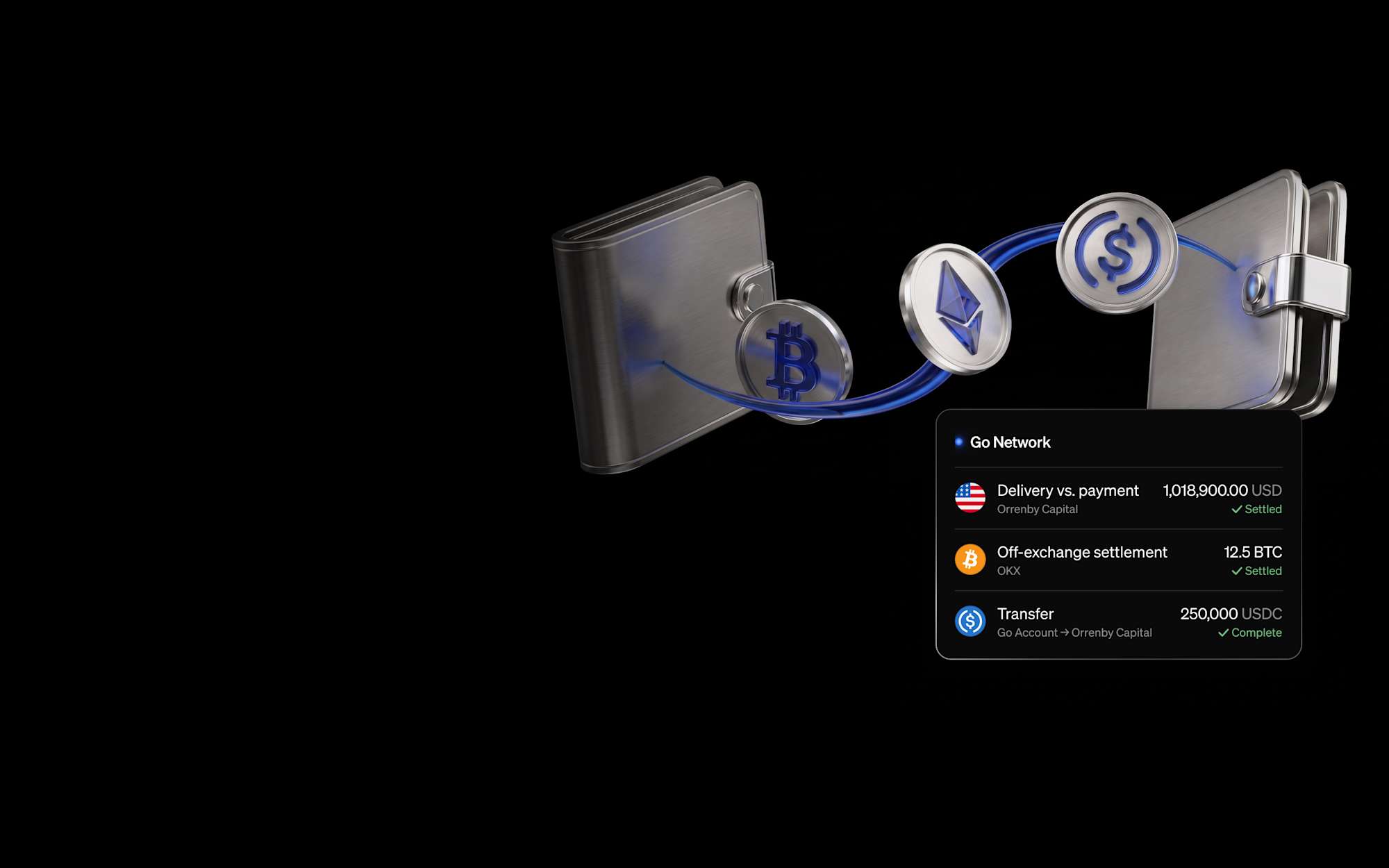
Go Network provides a purpose-built model to meet the needs of today's institutional workflows.
Settle digital assets and fiat in seconds-ensure both sides of the transaction execute simultaneously and within regulated qualified custody.
Delivery vs. Payment
Delegate assets to any of Go Network's Off-Exchange Settlement partners for trading, without leaving BitGo qualified custody.
Off-Exchange Settlement
Rewriting the Rules
of Settlement
By introducing the new standard for how assets move in the digital markets, Go Network transforms settlement from a vulnerability to a competitive advantage.
Security first
Reduced risk
Capital efficient
BitGo settlement removes principal-delivery risk by completing both sides of an eligible trade simultaneously while assets remain in regulated custody. Residual risks still include counterparty eligibility, asset and stablecoin risk, legal enforceability, operational events, and any transaction completed outside the delivery-versus-payment workflow.
Yes. Eligible trades can settle through simultaneous book-entry transfers while both parties’ assets remain in qualified custody.
BitGo settlement supports approved Go Network clients, including institutions, exchanges, market makers, and other counterparties, across fiat and eligible digital assets from BitGo’s broad platform. Current asset and counterparty availability depends on entity, jurisdiction, and onboarding status.
Finality is achieved through simultaneous off-chain ledger transfers between eligible custody accounts, typically in real time or within seconds and available 24/7. Transfers that leave the custody network also depend on the destination blockchain’s confirmation process.
If both legs are not ready, the settlement remains uncompleted and the assets stay in custody. The settlement agreement defines cancellation, dispute, operational-failure, and liability terms.
BitGo produces trade and settlement confirmations, account-ledger entries, timestamps, asset and cash amounts, counterparty details, statements, and API records. These records support reconciliation and audit.