Flexible Financing Structures
Structure financing around eligible assets, collateral arrangements, and liquidity needs.
Financing
Borrowing, lending, and credit solutions to manage liquidity, support trading activity, and maintain digital asset exposure.
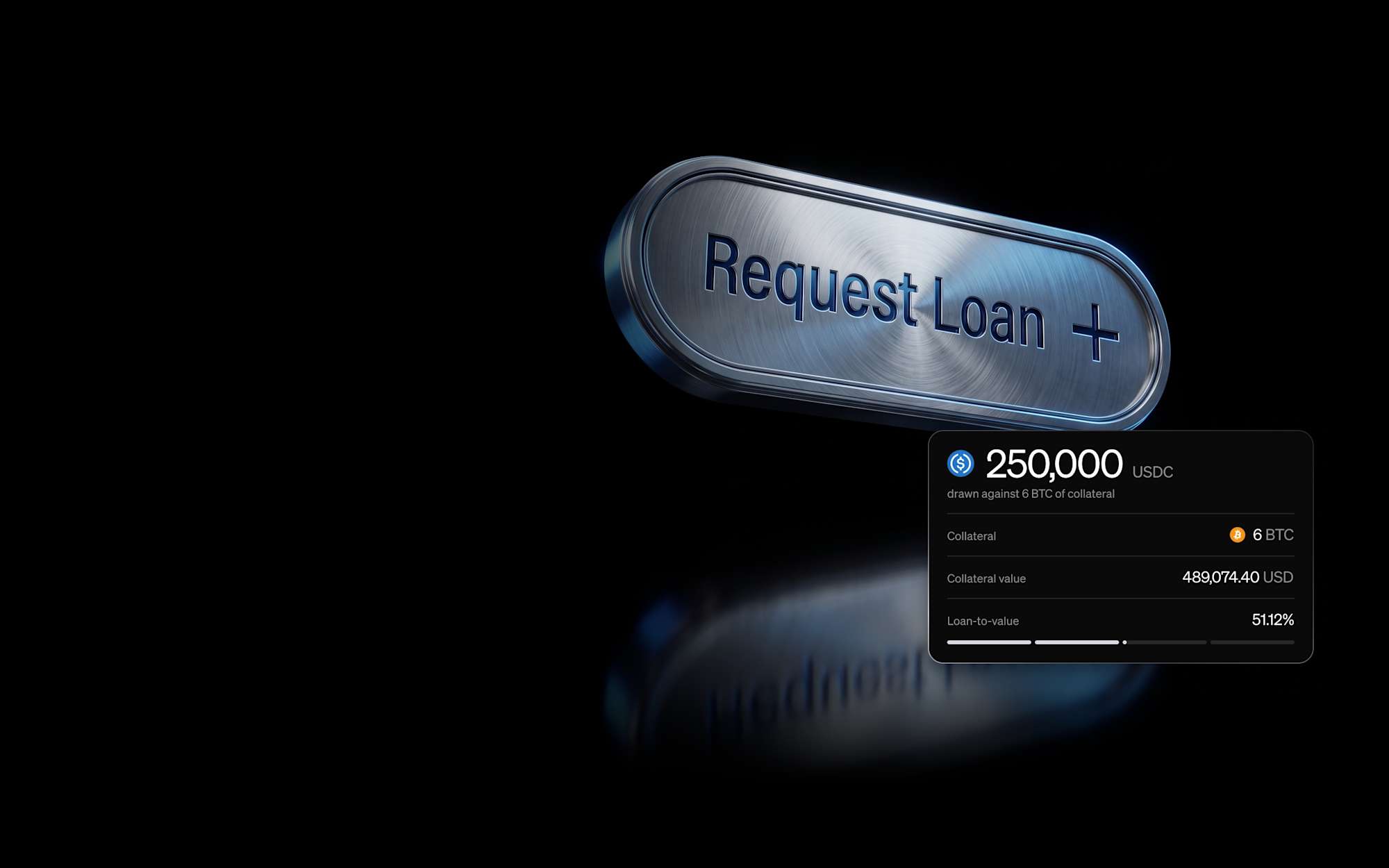
Access flexible borrowing and lending solutions designed for institutional liquidity and trading needs.
Liquidity without liquidation.
Borrow against eligible digital assets, including supported locked or staked positions, without selling your holdings.
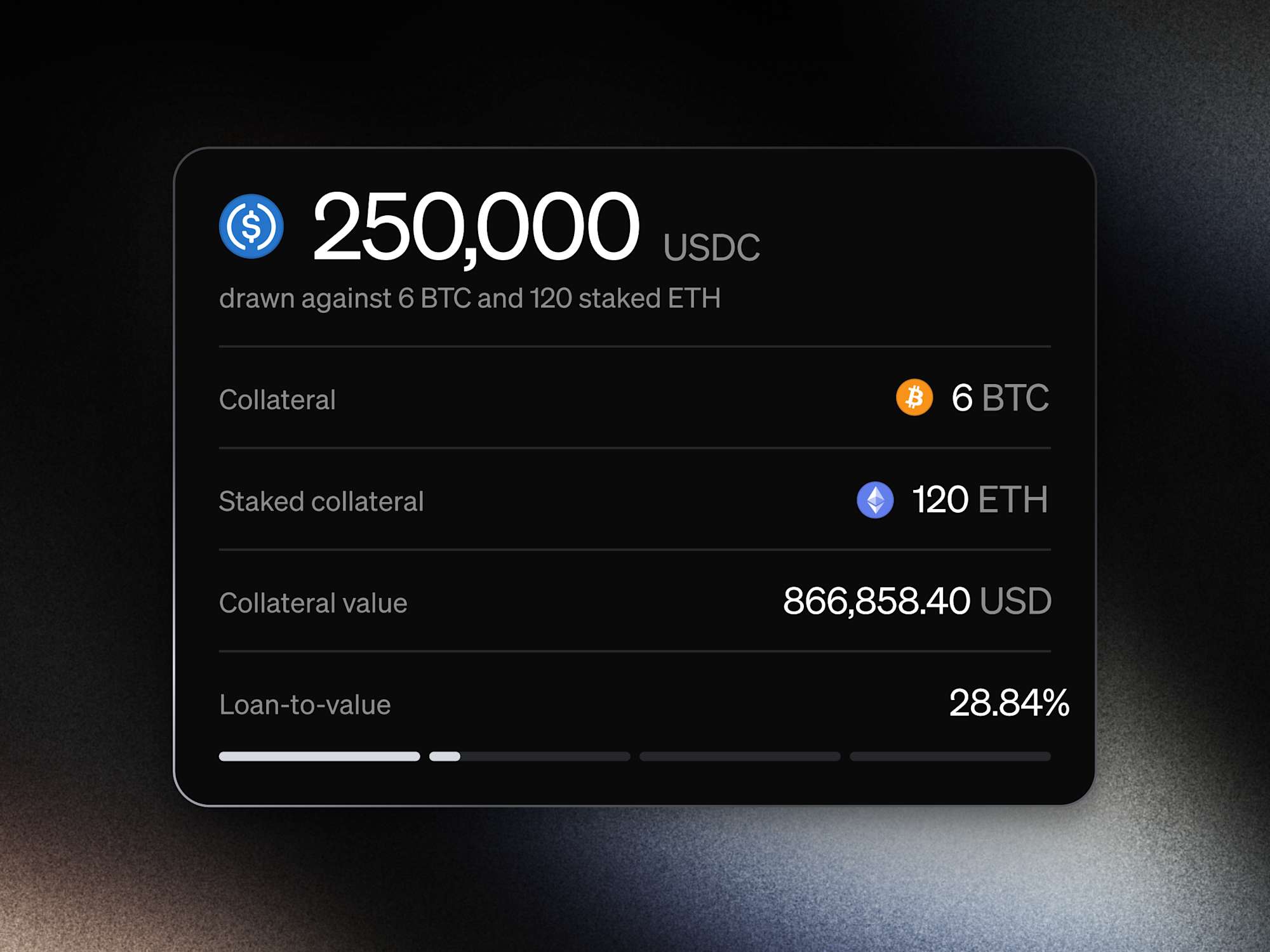
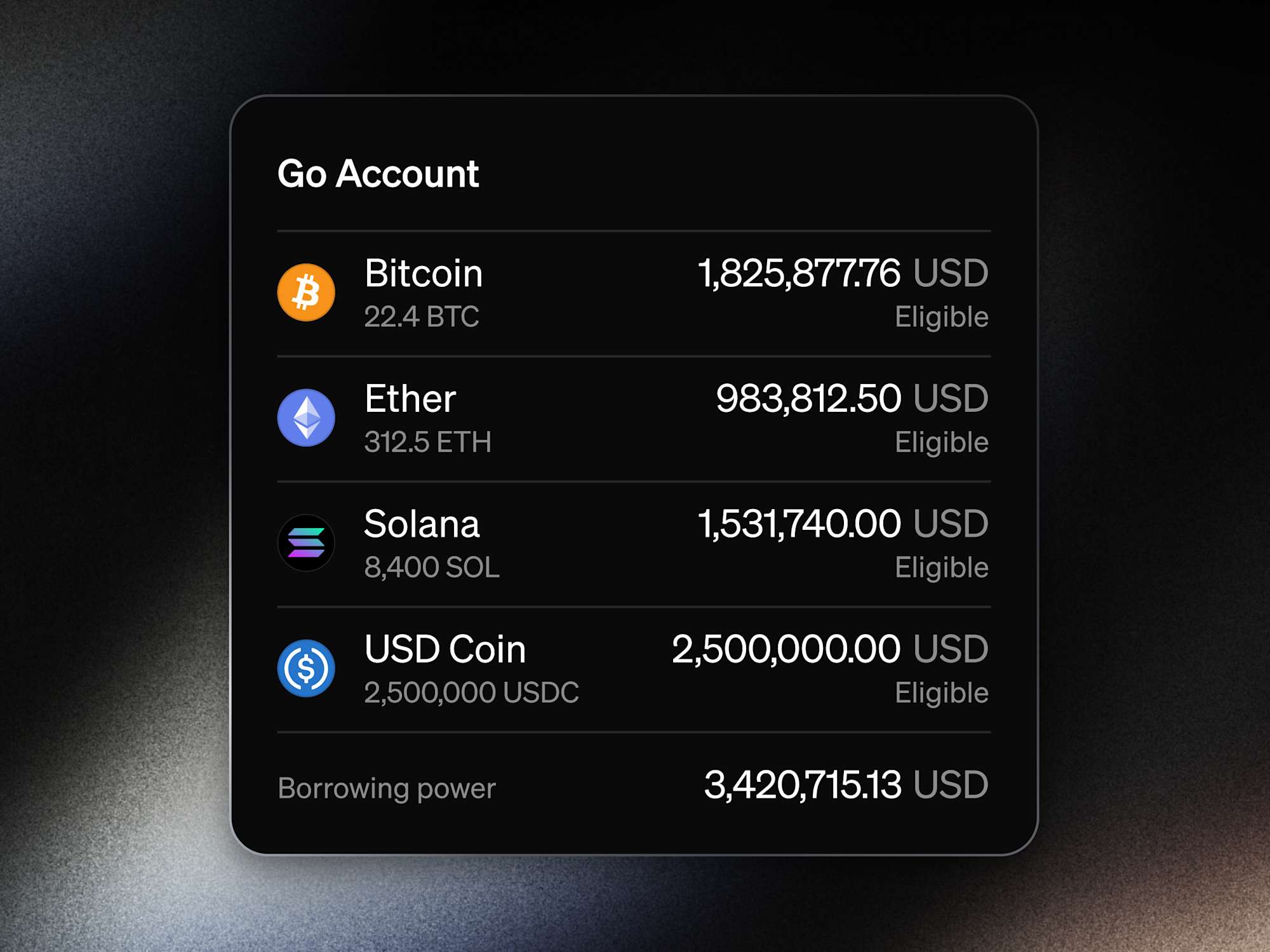
Not just individual assets.
Access liquidity across a diversified set of holdings in your account for greater flexibility and capital efficiency.
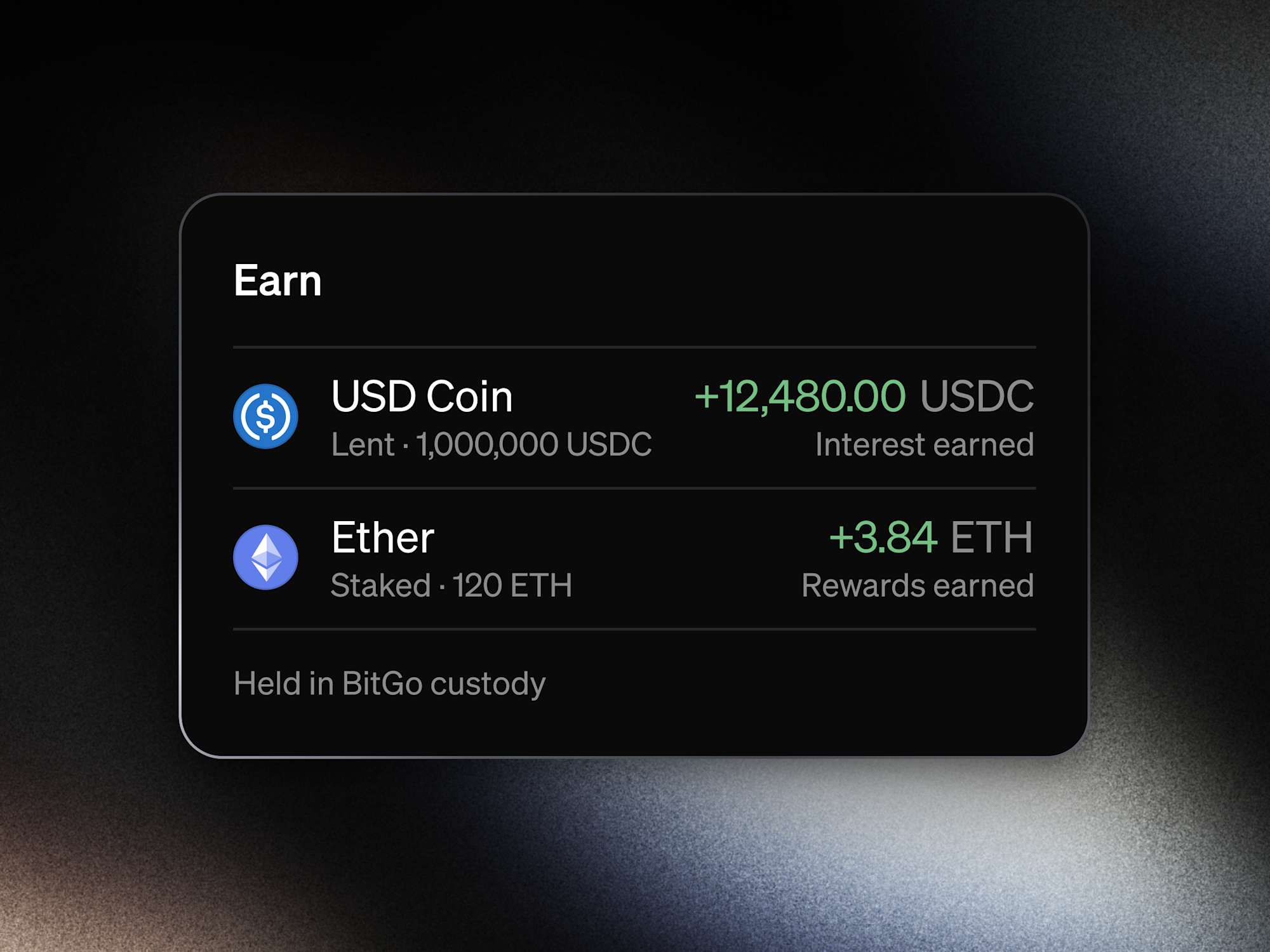
More ways to earn
Access eligible lending and staking opportunities through BitGo's institutional services, subject to availability.
Financing designed to support how institutions deploy capital.

Liquidity management and income generation.
Capital-efficient leverage.
Working capital without liquidating holdings.
Borrowing and lending solutions supported by regulated custody.
Trusted infrastructure that puts you in control.
Structure financing around eligible assets, collateral arrangements, and liquidity needs.
Direct BitGo financing arrangements without relying on DeFi lending protocols.
Dedicated teams and controls to work with clients to manage exposure and protect positions, not just automated triggers.
Institutional financing expertise supported by BitGo’s experience serving digital asset markets since 2019.
Prime Financing is part of BitGo Global Markets, connecting borrowing and lending with institutional trading, derivatives, and settlement capabilities.
BitGo digital asset lending uses customized loan and collateral agreements that define eligible assets, custody location, valuation sources, haircuts, maintenance levels, and margin procedures. Collateral can be monitored in regulated custody with agreed mark-to-market controls throughout the loan.
The loan agreement sets margin-call notices, cure periods, top-up options, and liquidation thresholds. If a threshold remains uncured, collateral is sold or applied under the agreed instructions to restore or close the exposure.
Counterparty risk sits with the named borrower, lender, or BitGo entity identified in the loan documents. BitGo discloses the legal counterparty, collateral structure, credit terms, and relevant risks before execution.
Lending rates are quoted based on the asset, amount, tenor, liquidity, collateral, market funding conditions, and counterparty profile. The trade confirmation states whether the rate is fixed or variable and lists all applicable fees.
Borrowed assets can be secured by collateral that remains in qualified custody or a controlled collateral account. Assets you lend are transferred to the named borrower under the loan agreement, which defines title, use, return, and collateral protections.
You receive position statements, principal balances, collateral values, loan-to-value ratios, margin activity, rates, accrued interest, transaction records, and maturity details. These reports support treasury, risk, accounting, and audit workflows.
Protections can include overcollateralization, conservative haircuts, ongoing valuation, margin calls, liquidation rights, regulated custody, and contractual treatment of forks, network disruptions, and settlement events. The loan documents specify close-out, netting, and recovery rights.