Security and control
Protect your funds by owning your own keys while leveraging BitGo's industry-leading multi-sig technology combined with custom account policies, such as user permissions or transaction limits, for added control.
Self-Custody
Why Self-Custody
Take complete control of your crypto strategy by keeping the keys with who you trust the most-your business.
Protect your funds by owning your own keys while leveraging BitGo's industry-leading multi-sig technology combined with custom account policies, such as user permissions or transaction limits, for added control.
Comply with local regulations requiring specific custody locations while continuing to rely on BitGo's leading technology and procedures.
Access wallets via BitGo's streamlined app or via API to customize your self-custody setup with hot and cold wallets for maximum operational efficiency.
Key Management
With self-custody hot wallets, you maintain the Client Key and the Backup Key, while BitGo keeps the Platform Key.
To start a transaction, utilize your User Key. BitGo will only countersign if the transaction meets the policies you've set.

Key Management
With self-custody cold wallets, BitGo customers control two of the three keys, but do so in an offline environment instead of online.
Customers initiate and half-sign transactions offline, then upload them to BitGo for countersigning - without the user key ever being exposed.


API Access
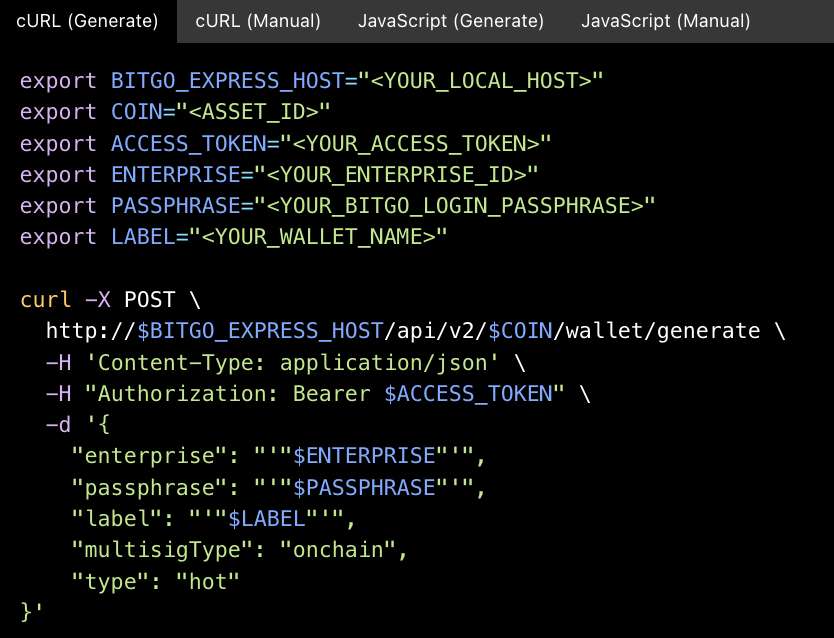
Programmatically create and manage self-custody wallets for your business and receive addresses for your end users.
In-app
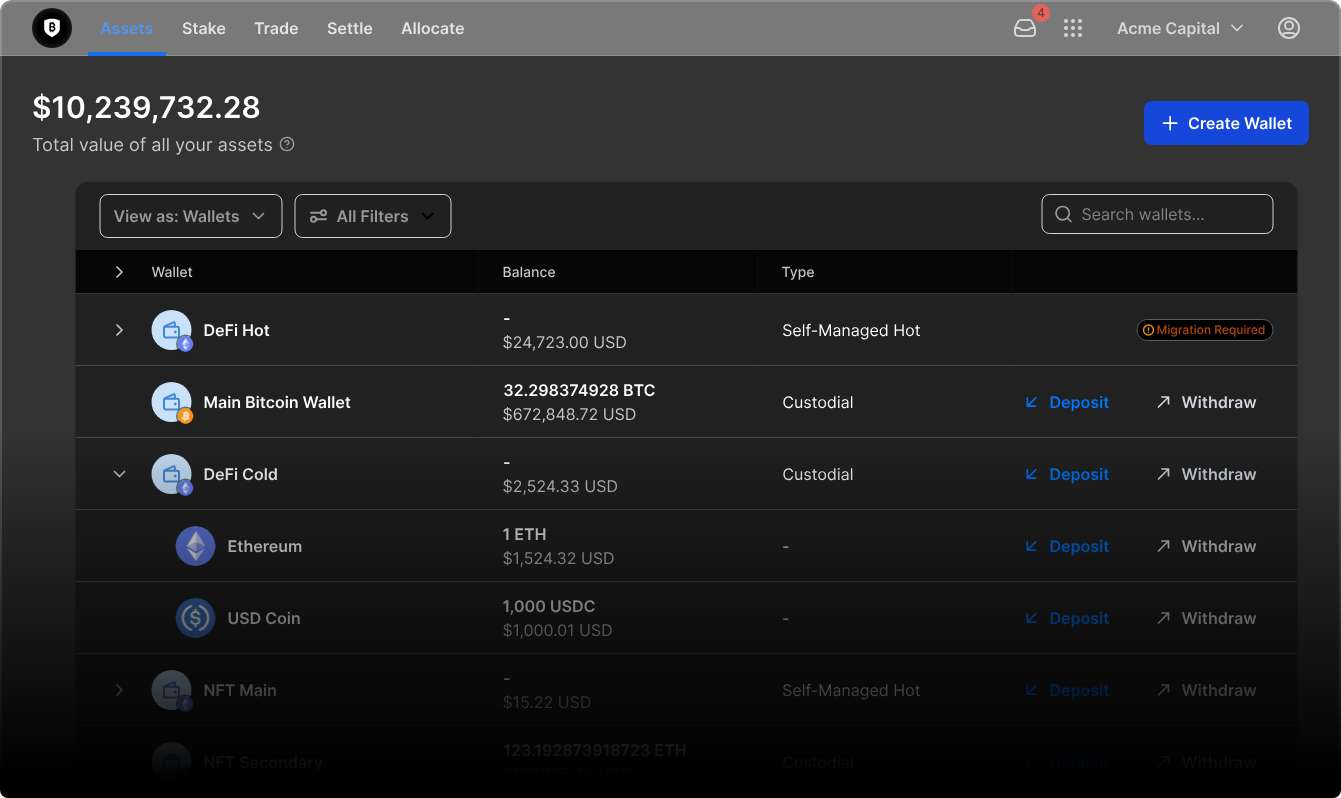
Access both hot and cold self-custody wallets directly in BitGo's app to configure funds for ultimate control.
A BitGo self-custody wallet means your organization controls the majority of signing keys, and every asset movement requires your key participation. Access follows the 2-of-3 key structure and the user, role, and policy permissions you configure.
Key recovery uses your separately stored backup key plus documented signer-replacement and administrator-recovery procedures. Maintaining multiple authorized signers and regularly testing the recovery process protects continuity when personnel change.
Yes. BitGo self-custody wallets support institutional policies such as address whitelists, transaction limits, velocity controls, user roles, and multi-user approvals while your team retains key control.
BitGo secures self-custody infrastructure with multi-signature authorization, hardware-security-module protection for its platform key, offline cold-wallet options, role separation, policy enforcement, and monitored transaction workflows. Your majority-key control reduces dependence on any single insider or system.
Your team owns key storage, signer governance, access reviews, transaction approvals, recovery testing, and operational monitoring. BitGo supplies the wallet platform, APIs, policy engine, and secure co-signing infrastructure.
Large transfers can move as soon as your required signers and policies approve them, with hot-wallet workflows supporting faster execution and cold-wallet workflows adding offline signing. Pre-approved destinations, defined thresholds, and tested procedures improve speed without weakening controls.