Your hardware
Self-Custody Cold
Cold Wallet Storage for Digital Assets
Securely store, manage, and protect your digital assets with a cold crypto wallet, keeping private keys in your control.
Globally trusted since 2013
Best for
Extra Security or Compliance Needs
For firms with infrequent but substantial transactions, cold crypto wallets offer enhanced security, enabling offline key management and supporting compliance with jurisdictional key storage requirements.
Key management
Self-Custody
Cold Wallets
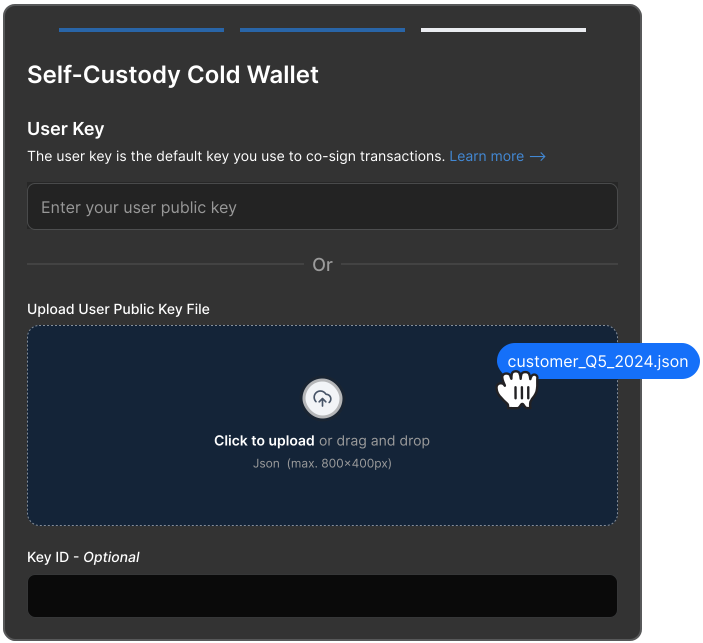
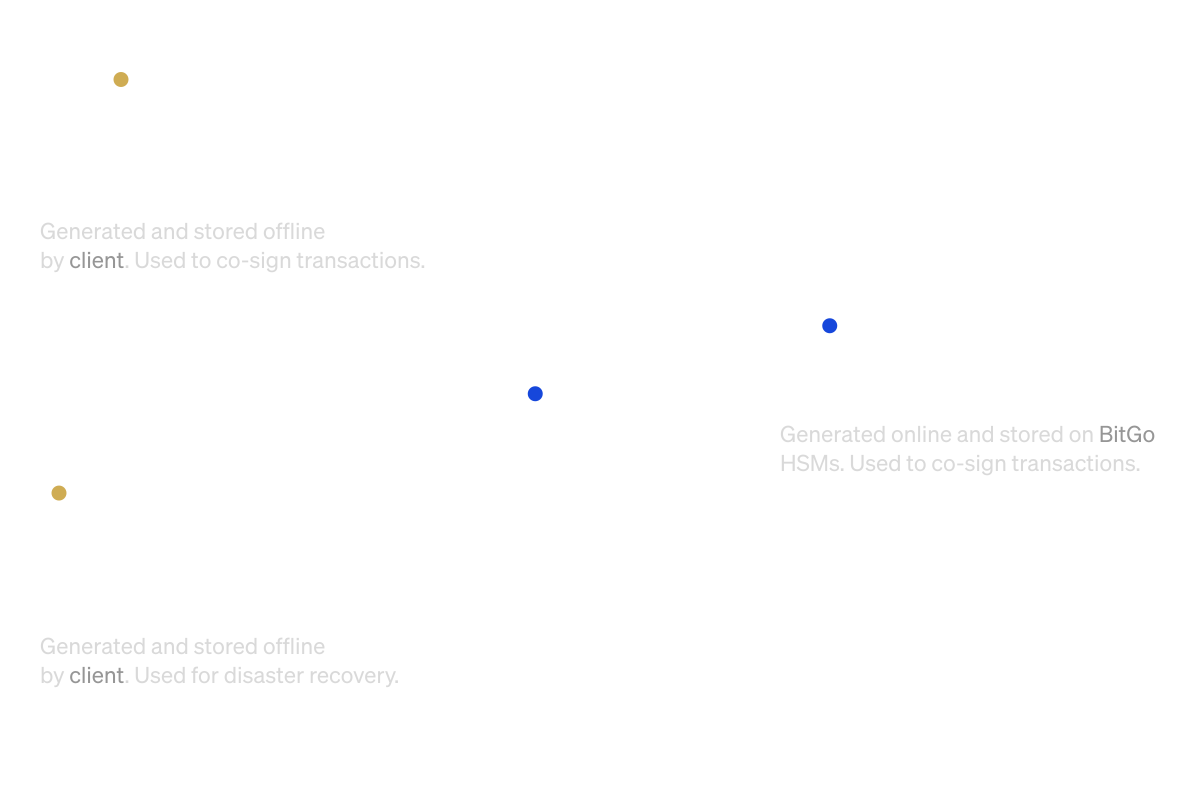
With self-custody cold wallets, BitGo customers control two of three keys within a secure, offline environment rather than an internet-connected system.
Customers initiate and partially sign transactions offline, then securely transmit them to BitGo for countersigning, without exposing private keys at any point in the process.
Self-custody cold wallets
Manage Your Own Cold Storage
Cold wallets for crypto, designed for your business.
-
Take control of your security
Protect your digital assets by ensuring private keys are never exposed online, while customizing account policies such as user permissions and transaction limits for greater operational control.
-
Stay compliant with regulators
Meet jurisdictional requirements with a cold storage wallet crypto solution that supports specific custody locations while continuing to rely on BitGo’s regulated infrastructure, technology, and procedures.
-
Customizable setups for advanced users
Secure private keys offline according to your internal requirements, while leveraging BitGo’s technology to build a more sophisticated, tailored cold crypto wallet setup.
-
9.3M+ Wallets Created
-
1700+ Assets Supported
-
$3T Lifetime Transactions
Keeping Your Assets Safe, One Feature at a Time
-
-
Our software
Use purpose-built software to securely initiate and sign transactions within your cold crypto wallet environment.
-
HSM Protection
Rely on hardware security modules (HSMs) to enforce wallet policies and protect transaction integrity.
Supporting Thousands of Businesses Around the World
Self-custody cold wallets are provided through our BitGo Inc. entity. Learn more.
The Latest
All News


FAQs
Who ultimately controls the private keys, and what governance model ensures no single point of failure?
Who ultimately controls the private keys, and what governance model ensures no single point of failure?
With BitGo’s self-custody cold crypto wallet model, clients control two of three private keys, ensuring primary ownership and authority over digital assets. Transactions require multiple approvals, eliminating single points of failure and enforcing strong governance through multi-signature controls.
In a worst-case scenario (internal fraud, key loss, or disaster), how do we recover access to assets?
In a worst-case scenario (internal fraud, key loss, or disaster), how do we recover access to assets?
BitGo’s cold storage wallet crypto architecture is designed with recovery in mind. Distributed key management and clearly defined recovery procedures allow clients to regain access to assets, even in adverse scenarios, without compromising security or control.
How quickly can assets be moved out of cold storage if market conditions require action?
How quickly can assets be moved out of cold storage if market conditions require action?
Cold wallets for crypto prioritize security over immediacy, but remain operationally efficient. Transactions can typically be completed within a defined timeframe, balancing offline protection with the ability to access assets when needed.
What threats is BitGo designed to defend against?
What threats is BitGo designed to defend against?
BitGo’s crypto cold storage wallet infrastructure is built to mitigate a range of risks, including insider threats, external attacks, and physical security breaches. Multi-signature controls, offline key storage, and hardware-backed protections work together to reduce attack surfaces and protect digital assets.
How do auditors and regulators evaluate cold storage and custody practices?
How do auditors and regulators evaluate cold storage and custody practices?
BitGo supports institutional compliance by providing audit trails, policy controls, and regulated custody structures. Cold crypto wallets are designed to align with jurisdictional requirements, enabling clients to demonstrate control, transparency, and adherence to regulatory standards.
With a self-custody cold wallet, what exactly is BitGo providing and what are we responsible for?
With a self-custody cold wallet, what exactly is BitGo providing and what are we responsible for?
With a self-custody cold wallet, BitGo provides multi-signature wallet software, policy enforcement, a protected platform co-signing key, and transaction infrastructure. Your team controls two offline keys and is responsible for key ceremonies, signer governance, hardware security, access reviews, and recovery readiness.
What is the recovery process if we lose a key or a signer becomes unavailable?
What is the recovery process if we lose a key or a signer becomes unavailable?
Recovery uses the offline backup key, replacement-signer procedures, and the wallet’s documented key-management process. Your team should test recovery regularly and maintain authorized signers in separate secure locations.
How do multi-signature setups work on a cold wallet, and how many signers do we control?
How do multi-signature setups work on a cold wallet, and how many signers do we control?
BitGo cold wallets typically use a 2-of-3 multi-signature structure. Your organization controls two offline keys, and BitGo controls one platform key that countersigns only after the transaction passes policy checks.
What are the tradeoffs in speed versus security compared to a hot setup?
What are the tradeoffs in speed versus security compared to a hot setup?
Cold wallets trade transaction speed for stronger isolation because your team must create or approve signatures offline before BitGo countersigns. They fit infrequent, high-value transfers, while hot wallets support faster automated movement.
Can our compliance team enforce policy on a self-custodied cold wallet?
Can our compliance team enforce policy on a self-custodied cold wallet?
Yes. Your compliance team can enforce address whitelists, user permissions, spending and velocity limits, and approval policies on a self-custodied cold wallet.
How do we move assets out of cold storage quickly if we urgently need to?
How do we move assets out of cold storage quickly if we urgently need to?
Your team can prepare and half-sign an urgent transfer offline, then submit it to BitGo for policy validation and countersigning. A tested signer roster, pre-approved destination addresses, and an emergency runbook make this process faster and safer.
Manage Your Digital
Asset Strategy