Qualified Custody
Safeguard eligible collateral through BitGo's regulated cold custody infrastructure, with tri-party account structures and controls designed for institutional clients.
Manage collateral across institutional financing and trading arrangements with qualified custody, ongoing monitoring, and dedicated servicing.

Manage counterparty exposure, collateral requirements, and ongoing obligations through BitGo’s institutional collateral management services.
Hold eligible collateral in BitGo's qualified custody through tri-party arrangements, helping reduce counterparty exposure
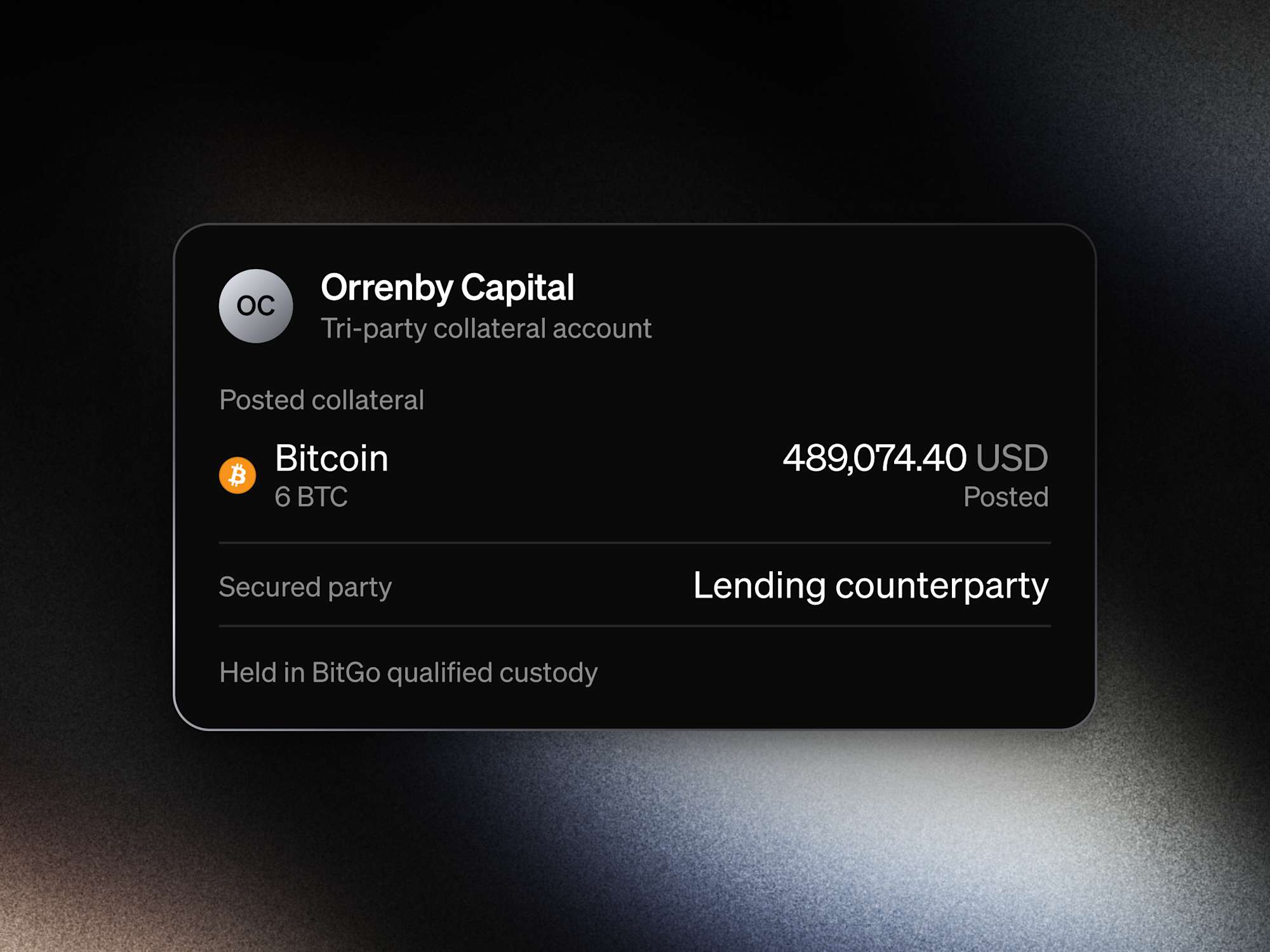
Monitor collateral positions, valuations, and sufficiency against agreed requirements to support ongoing risk management.
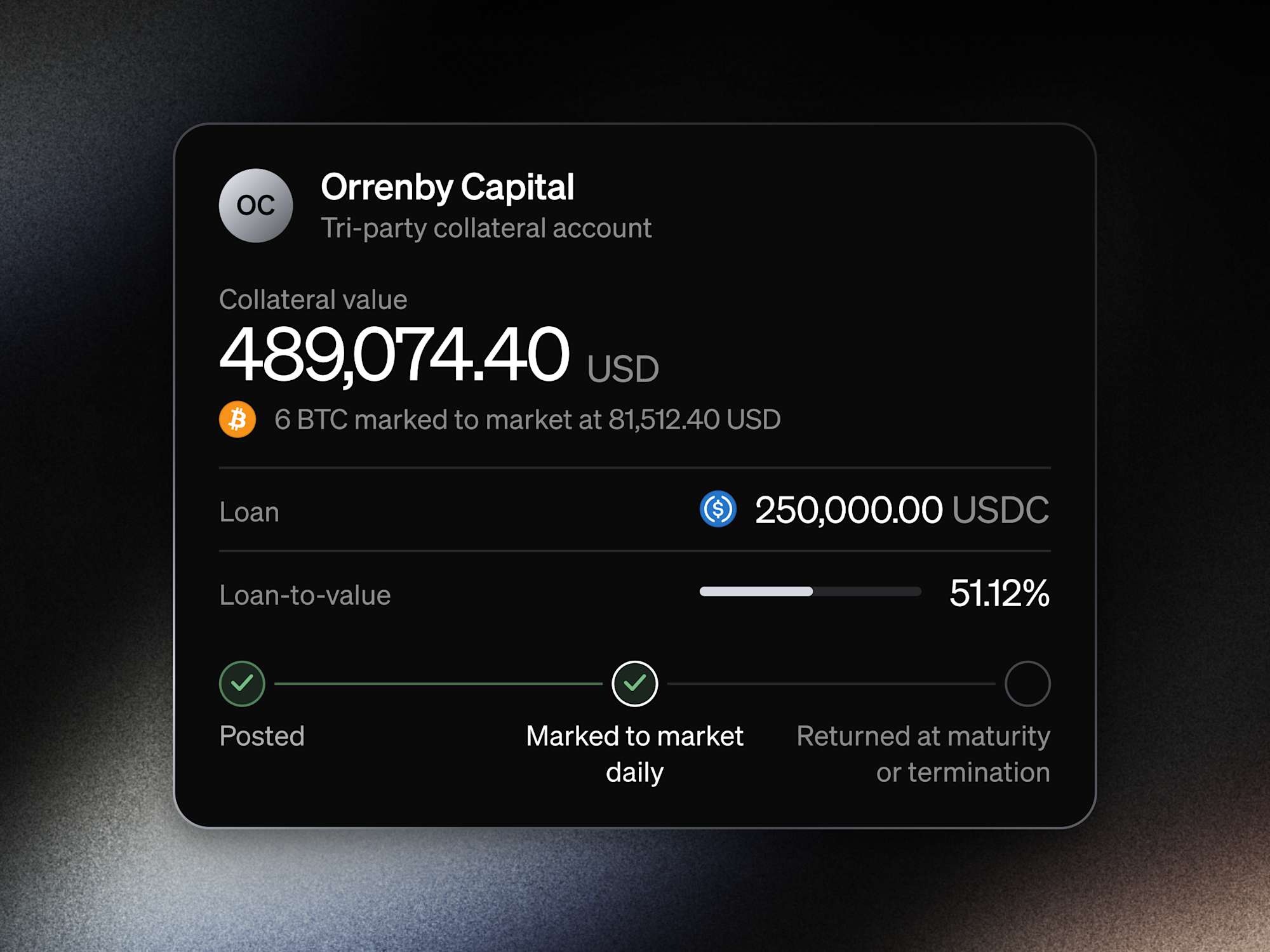
Support margin calculations, collateral calls, and adjustments as market conditions and exposure change.
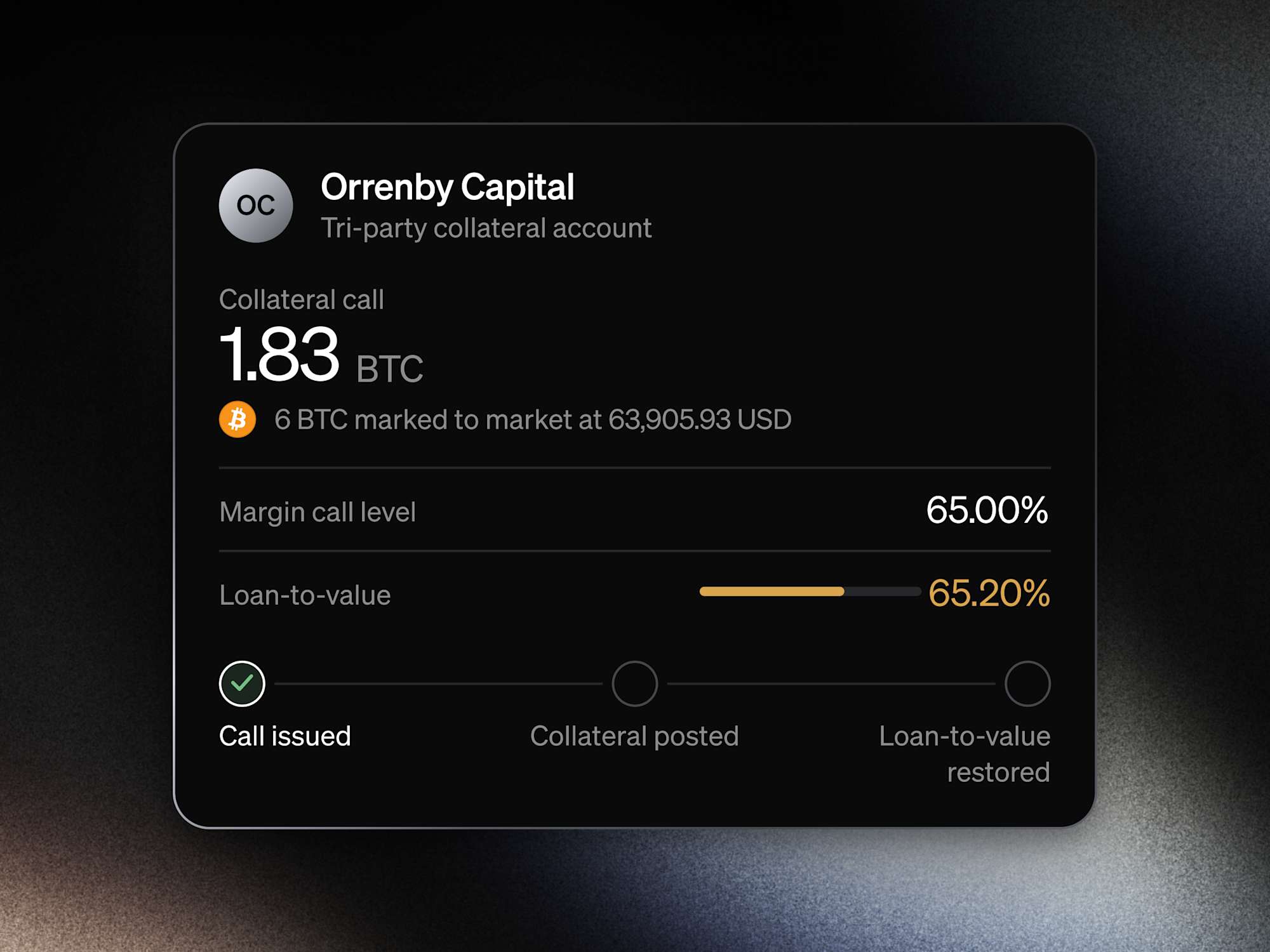
Execute collateral liquidations where required, using automatic triggers or lender discretion.
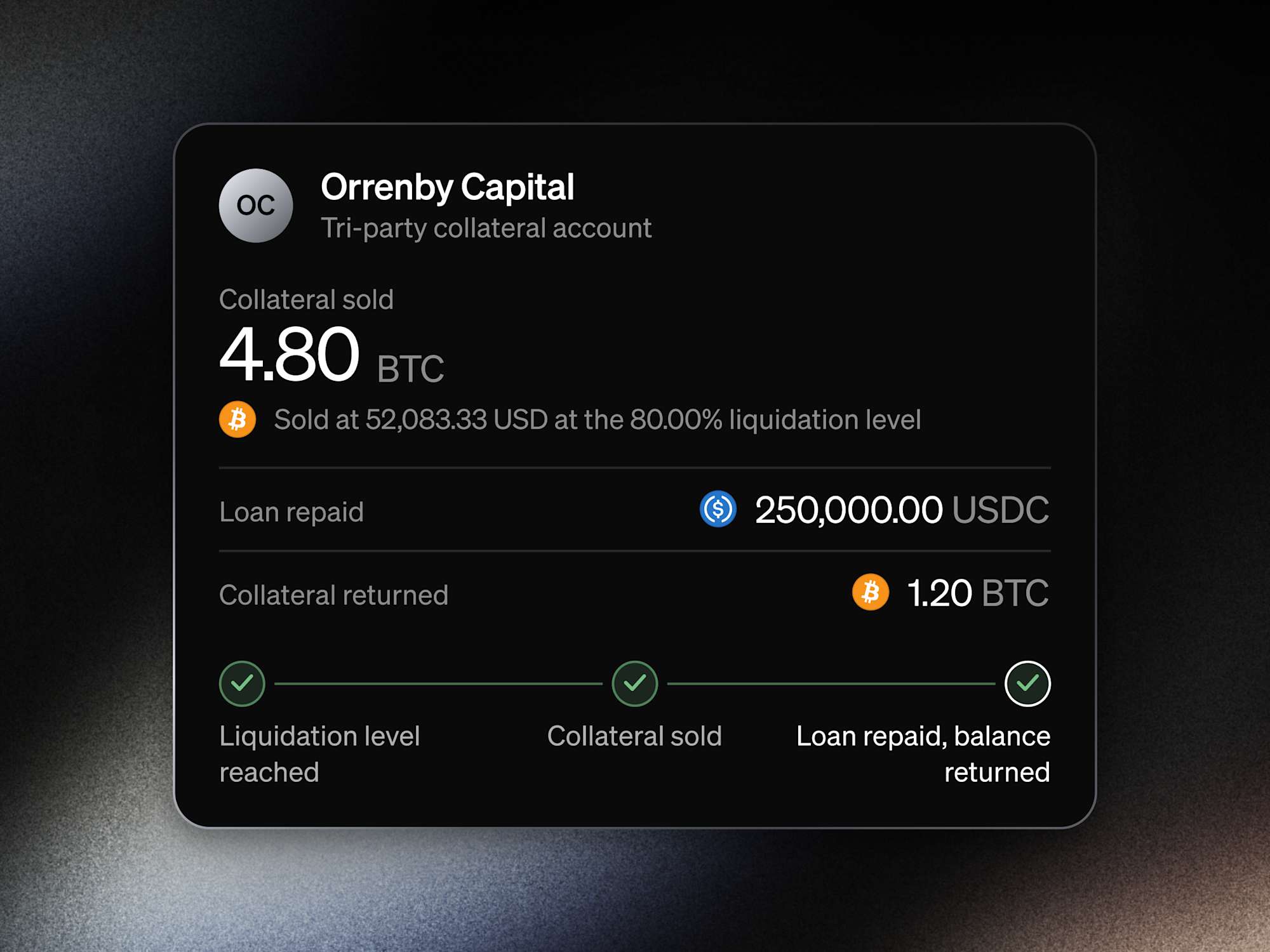
Safeguard eligible collateral through BitGo's regulated cold custody infrastructure, with tri-party account structures and controls designed for institutional clients.
Support collateral arrangements through documented custody, control, and servicing agreements that establish the rights and obligations of relevant parties.
Receive collateral monitoring and servicing reports and notices to support margin requirements, collateral sufficiency, and transaction obligations.
Benefit from capital markets expertise across collateral servicing, financing, derivatives, and structured products.
Collateral Management is part of BitGo Global Markets, connecting collateral servicing with institutional execution, Prime Financing, and derivatives and structured solutions.
BitGo acts as a neutral third party between the secured party (lender) and the pledgor (borrower). Collateral stays in BitGo qualified custody, in an account dedicated to the arrangement and governed by a custodial services agreement and an account control agreement (ACA) signed by both parties. BitGo enforces the ACA through account policies, so neither party can move the collateral or change the other’s settings, such as whitelisted addresses, on its own.
Margin terms, including loan-to-value and margin-call levels, are set in the loan agreement. Where BitGo services the loan, BitGo monitors collateral value against those thresholds on an ongoing basis and notifies the parties when a margin call is triggered. Otherwise the secured party monitors the position and issues margin calls. In either case, the pledgor cures a call by adding collateral to the tri-party account.
If the pledgor defaults, the secured party sends BitGo a notice of exclusive control under the ACA and copies the pledgor. If the notice isn’t disputed, BitGo updates the account controls so the secured party can direct the collateral. If the pledgor disputes it, the account is frozen until the dispute is resolved under the agreement or by court order.
Yes. Collateral remains in BitGo qualified custody while it is pledged to the secured party under the ACA, held in an account dedicated to that tri-party arrangement.
Where BitGo services the loan, collateral is valued at market prices with asset-specific haircuts, using the methodology in the loan agreement. In other arrangements, the secured party values the collateral under its agreement with the pledgor. Both parties can view collateral balances in the BitGo platform at any time.
The secured party and the pledgor can both view the tri-party account’s balances, deposits, withdrawals and transaction history in the BitGo platform, and both receive account statements. Where BitGo services the loan, reporting also includes collateral value, loan-to-value and margin status.