Class III bank vaults
Custody Wallets
Safeguard Your Digital Assets
Get insured, regulated qualified custody with custodial wallets designed for institutions-where private keys for your digital assets are secured offline in cold storage.

Globally trusted since 2013
Best for
Protecting Your Long-Term Holdings
BitGo customers typically hold the majority of their digital assets in custodial wallets, optimizing for security, regulatory alignment, and long-term asset protection.
Key management
Custody Wallet
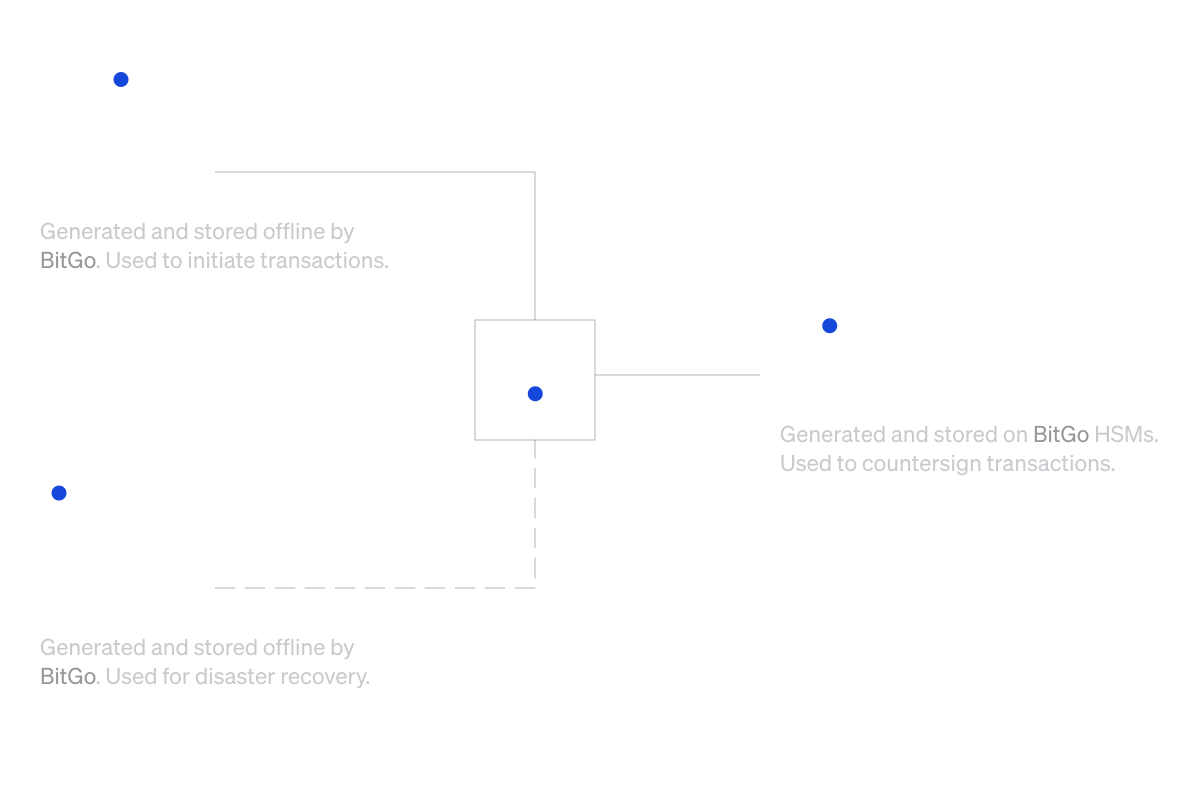
With custodial wallets, BitGo holds all three private keys and secures them in cold storage, fully isolated from internet-connected systems.
To move funds, clients must initiate a transaction through BitGo and complete a series of security and verification checks.
Custody Wallets
Wallets Designed for Your Business
Access digital assets through custodial wallets without compromising security or control.
-
Seamlessly create and scale wallets
Create and scale custody wallet infrastructure through a modular approach, with a streamlined and intuitive developer experience.
-
Deploy funds from cold storage
Put your funds to work: execute crypto trading directly from custody, access lending through BitGo Prime, or stake digital assets to earn rewards.
-
Customize to fit your operations
Combine custodial crypto wallets with self-custody hot wallets to balance security and liquidity across your portfolio.
-
Take control of your security
Enforce wallet policies such as whitelisting, transaction limits, and user roles to strengthen governance and operational security.
-
9.3M+ Wallets Created
-
1700+ Assets Supported
-
$3T Lifetime Transactions
Keeping Your Digital Assets Secure, One Feature at a Time
-
-
Initiate withdrawals 24/7
Withdraw funds at any time, with transactions processed within a defined 24-hour SLA.
-
Identity verification
Apply identity verification procedures and controls to protect access and authorize transactions.
-
Whitelisting
Pre-approve the addresses where assets can be sent.
-
velocity controls
Set limits on how much can move in a given timeframe.
-
User policies
Set roles and permissions on an individual level to enforce governance across custodial wallets.
Supporting Thousands of Businesses Around the World
FAQs
If BitGo were to face financial distress, how are our assets legally protected and segregated?
If BitGo were to face financial distress, how are our assets legally protected and segregated?
Custodial wallets at BitGo are structured to keep client assets segregated from corporate balance sheets. Assets are held within regulated entities, ensuring they remain protected and separate in the event of financial distress.
What does 'qualified custody' actually mean in practice for our compliance obligations?
What does 'qualified custody' actually mean in practice for our compliance obligations?
Qualified custody with BitGo means digital assets are held within regulated trust entities that meet jurisdictional requirements for safekeeping, reporting, and oversight. Custodial crypto wallets are designed to support institutional compliance obligations while maintaining strict security controls.
How does BitGo provide transparency into holdings, movements, and controls for audit purposes?
How does BitGo provide transparency into holdings, movements, and controls for audit purposes?
BitGo provides detailed audit trails, reporting tools, and policy enforcement within its custody wallet infrastructure. This enables clients to monitor asset holdings, track movements, and demonstrate internal controls for audits and regulatory reviews.
What are the real trade-offs between BitGo custody and self-custody for an institutional investor?
What are the real trade-offs between BitGo custody and self-custody for an institutional investor?
Custodial wallets shift operational responsibility to BitGo, reducing key management risk while providing regulated oversight and infrastructure. In contrast, self-custody offers direct control but requires institutions to manage security, governance, and compliance independently.
How does insurance actually work-what events are covered, and what gaps should we be aware of?
How does insurance actually work-what events are covered, and what gaps should we be aware of?
BitGo maintains insurance coverage for assets held within custodial wallets where applicable. Coverage is designed to protect against specific risks, with clear terms outlining included events and limitations, allowing institutions to assess residual risk as part of their custody strategy.
With custodial wallets, who controls the keys, and what recourse do we have if access is disrupted?
With custodial wallets, who controls the keys, and what recourse do we have if access is disrupted?
With BitGo custodial wallets, BitGo controls the three signing keys under a regulated custody process, while authorized client users initiate transactions through their account controls. Offline backup-key procedures, identity verification, and institutional support provide a recovery path if access is disrupted.
How do you separate our holdings from other clients' assets on the platform?
How do you separate our holdings from other clients' assets on the platform?
BitGo separates your holdings in segregated client accounts and dedicated on-chain wallet structures maintained by the applicable regulated custodian. Those assets remain distinct from BitGo’s corporate balance sheet and from other clients’ beneficial ownership.
What approval and signing controls can we enforce internally before a transaction executes?
What approval and signing controls can we enforce internally before a transaction executes?
You can enforce address whitelists, transaction velocity limits, spending limits, user roles, multi-user approvals, and administrative permissions before a transaction executes. BitGo countersigns only when the transaction satisfies the configured policies.
How are custodial wallet balances reflected for audit, tax, and regulatory reporting?
How are custodial wallet balances reflected for audit, tax, and regulatory reporting?
Custodial wallet balances are supported by account statements, transaction histories, wallet-level records, audit trails, and policy logs that can feed accounting and compliance workflows. Tax treatment and filing remain subject to your accounting policies and tax adviser.
What is your track record on withdrawal availability during periods of market stress?
What is your track record on withdrawal availability during periods of market stress?
BitGo enables custodial wallet withdrawals 24/7 under a defined 24-hour service level, including during volatile markets. Completion time can reflect policy approvals, compliance review, asset-specific processing, and blockchain conditions.
Can we set role-based permissions across our treasury, ops, and compliance teams?
Can we set role-based permissions across our treasury, ops, and compliance teams?
Yes. You can assign role-based permissions across treasury, operations, compliance, and administrative teams, then apply approval thresholds and transaction limits to each role.
Custody wallets are provided through our BitGo Bank & Trust, National Association, BitGo New York Trust Company, LLC, BitGo Europe GmbH, and BitGo GmbH (Switzerland) entities. Learn more.
Manage Your Digital
Asset Strategy